
Kidexation – A Parent-Child Interactive ToyBox for Sexual Education with an App
Project time: March 2021 – May 2021 (Duration: 44 Days, 3 hours/day)
Individual project: All tasks are done by myself.
Keywords: product design, UX research, educational product, gamification, sustainable product, App design, Design system, parental teaching product, Parent-children interaction.
Target Audience: Parents with children aged 6 to 14.
Pain Points
In East Asian societies, the relationship between parents and children can often be subtle and complex, making certain topics difficult to address. Subjects like reproduction and sexuality are often associated with embarrassment and taboo. However, with the increasing frequency of child sexual abuse cases in recent years, some parents have started recognizing the importance of sexual education.
Despite this awareness, the deep-rooted influence of traditional East Asian culture still makes it challenging for parents to openly discuss sexual education with their children.
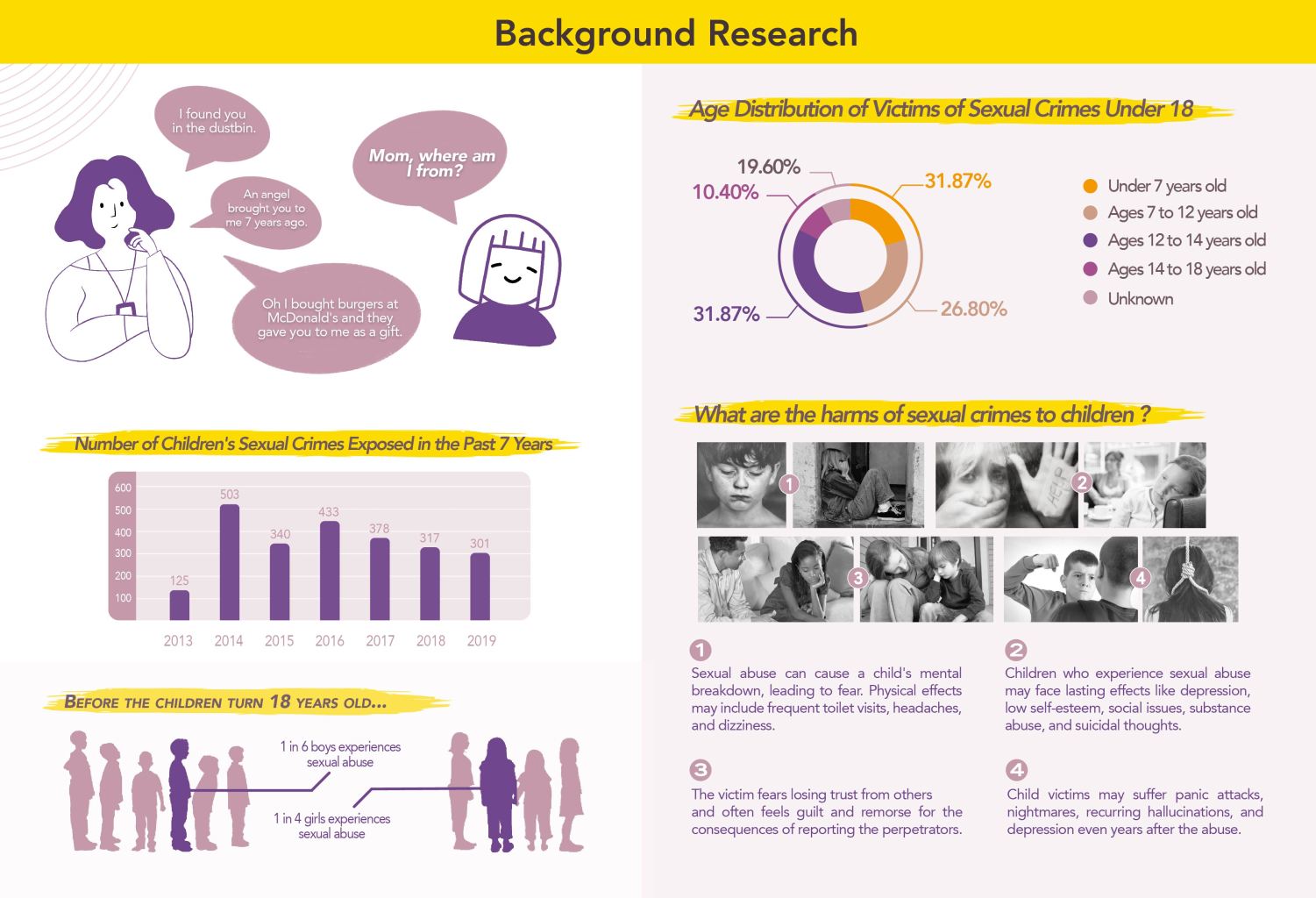
From the background research above, when we were young and asked our parents, “Where do I come from?” many would avoid the topic, giving answers like, “You were a gift from God.” This avoidance made the topic of sex feel forbidden, which only increased our curiosity.
Unfortunately, this often led teenagers to seek information from unhealthy sources like porn or other unprofessional materials. The lack of proper knowledge not only affects personal development but can also contribute to a rise in sexual crimes among teenagers, leaving many children vulnerable and hurt.
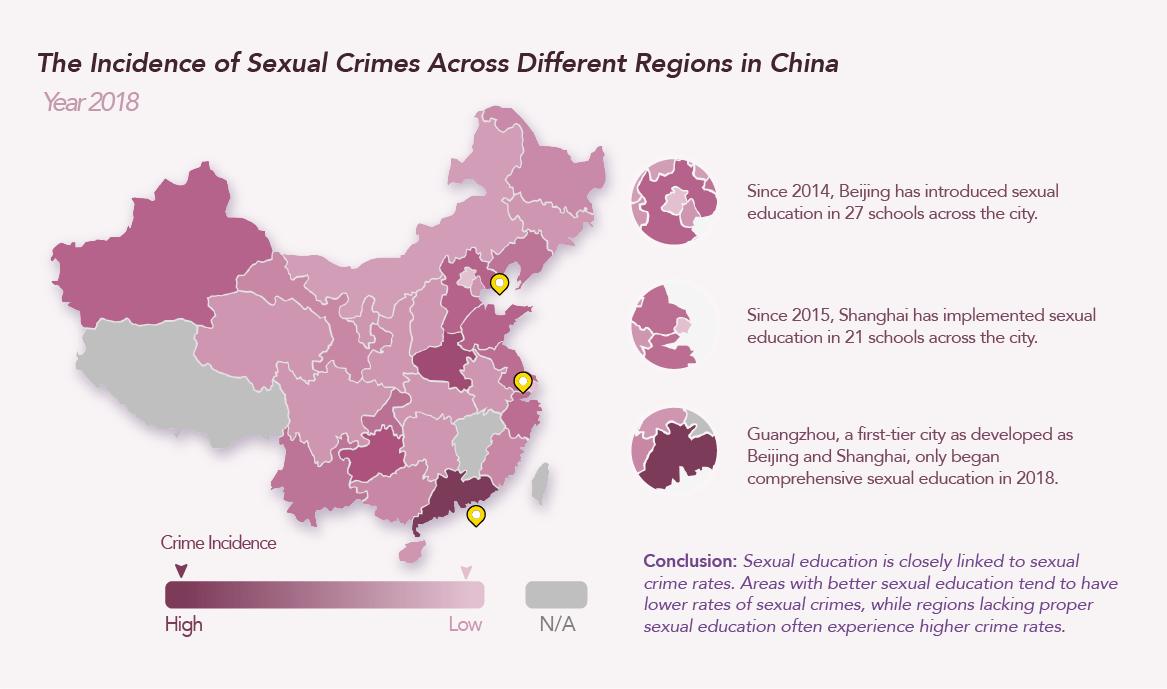
From the graphics above, it’s clear that in more developed areas of China, the crime incidence is relatively higher due to larger populations. However, regions that have implemented sexual education for K-12 students show significantly lower rates of sexual crimes. This highlights the long-term impact of sexual education—students who received proper education 5 to 10 years ago are better equipped to protect themselves and are less likely to harm others or become offenders.
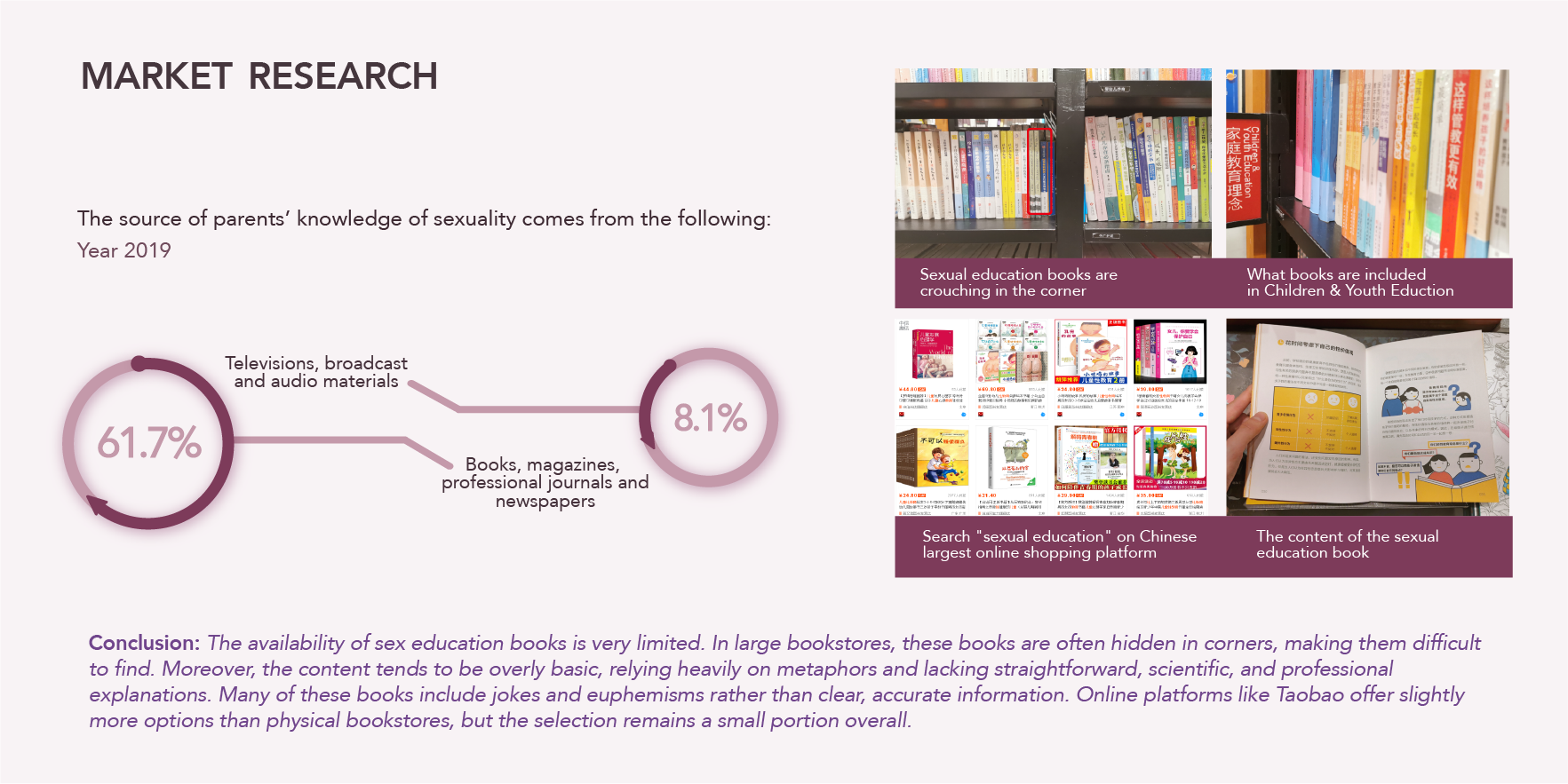
Market Research
User Research: Gathering Insights
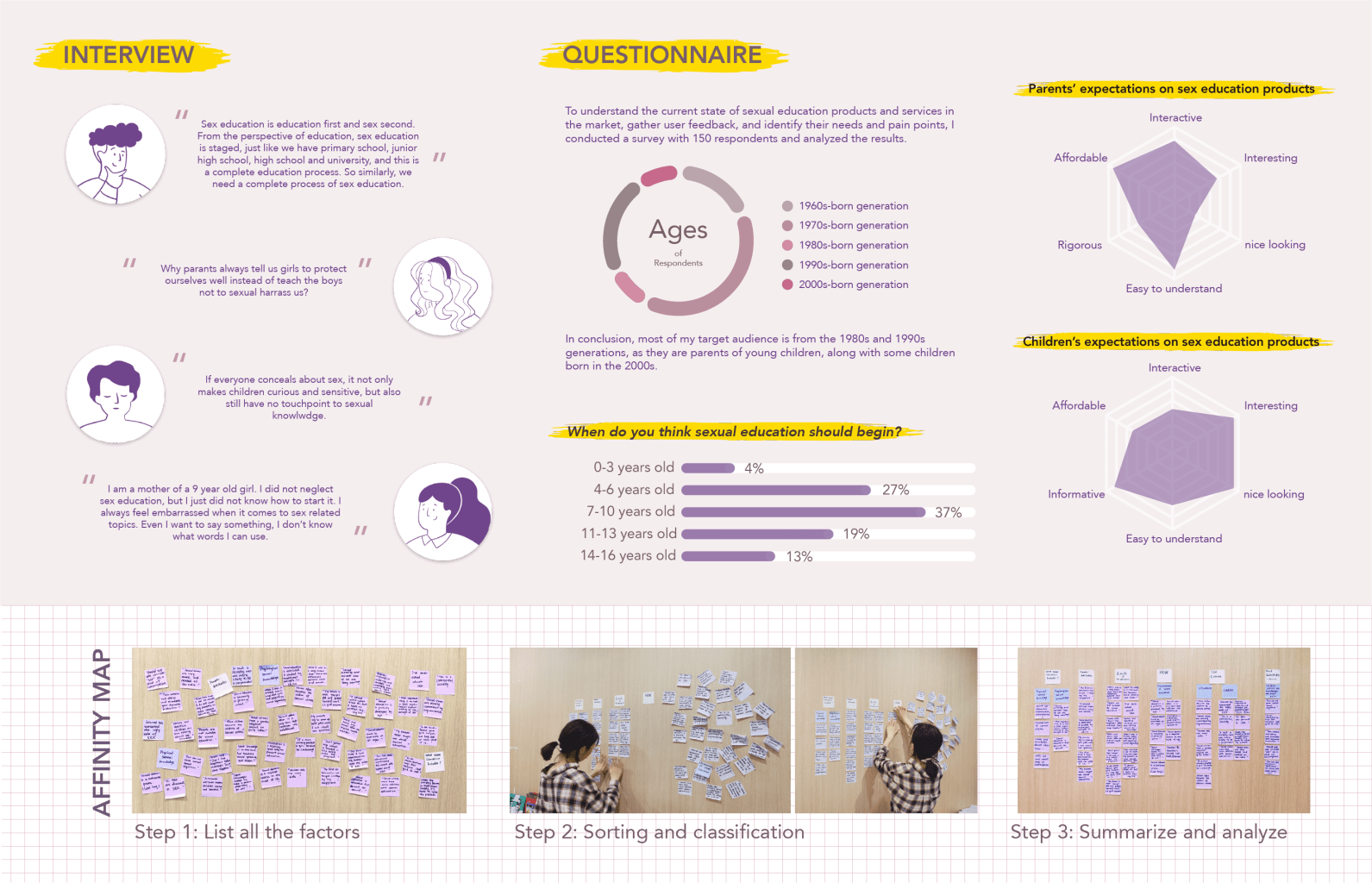
To delve deeper into the needs and pain points of my target audience, I conducted user research through interviews and questionnaires with 150 respondents:
- Interviews: Parents shared their struggles with initiating conversations about sexual education, citing embarrassment, lack of resources, and uncertainty about how to explain sensitive topics.
- Questionnaire Results: Insights revealed that the majority of parents are from the 1980s and 1990s generations, making them the key audience for sexual education tools. Respondents also indicated that sexual education should begin at an early age (4-6 years) but lacked clarity on how to start.
From Research to Insights: Key Findings
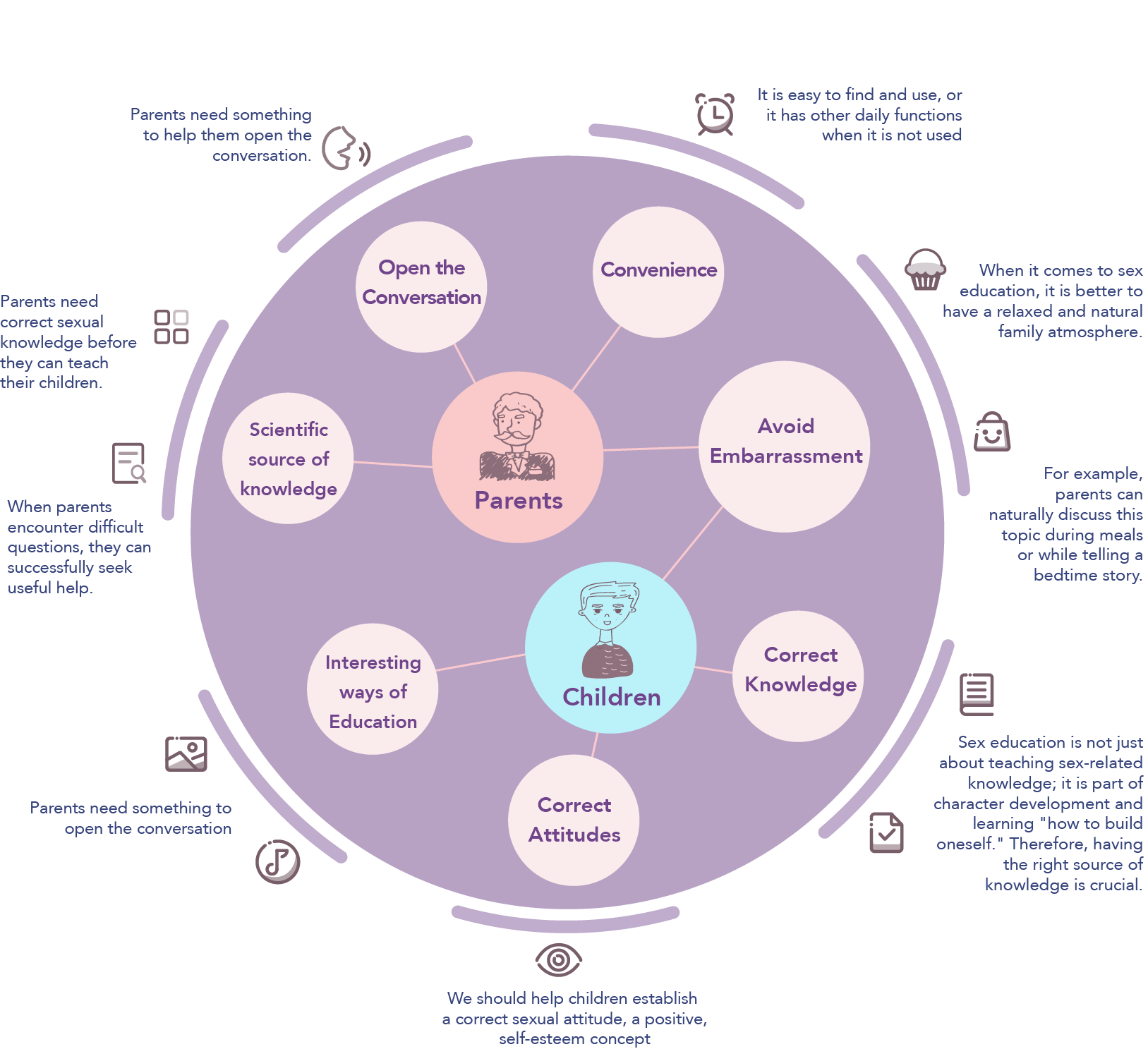
Based on the research, I identified several key insights:
- Parents Need Support: Many parents feel ill-equipped to address sexual education and need tools to open conversations naturally and confidently.
- Importance of Accessibility: Products should be easy to find, intuitive to use, and integrated into everyday family activities.
- Children’s Needs: The solution should focus on helping children establish a positive attitude toward sexuality and build their understanding in an engaging, age-appropriate manner.
Turning Insights Into Ideas
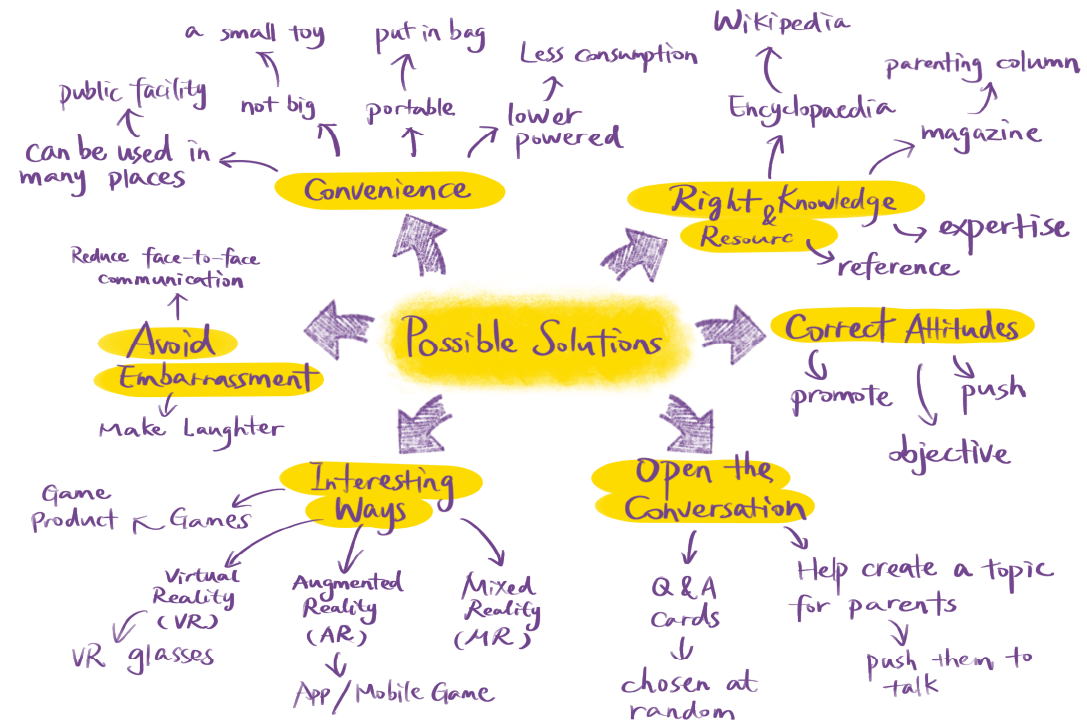
From these findings, I explored opportunities for design:
- Interactive and Inclusive Solutions: Creating a product that combines education with play to make learning enjoyable for children while guiding parents through the process.
- Integrated Tools: Pairing a physical product (like a game) with a digital app to provide flexible learning methods for families.
- Breaking Barriers: Designing resources that fit naturally into family routines, such as storytelling or mealtime discussions, to avoid feelings of embarrassment or taboo.
Start the Design:
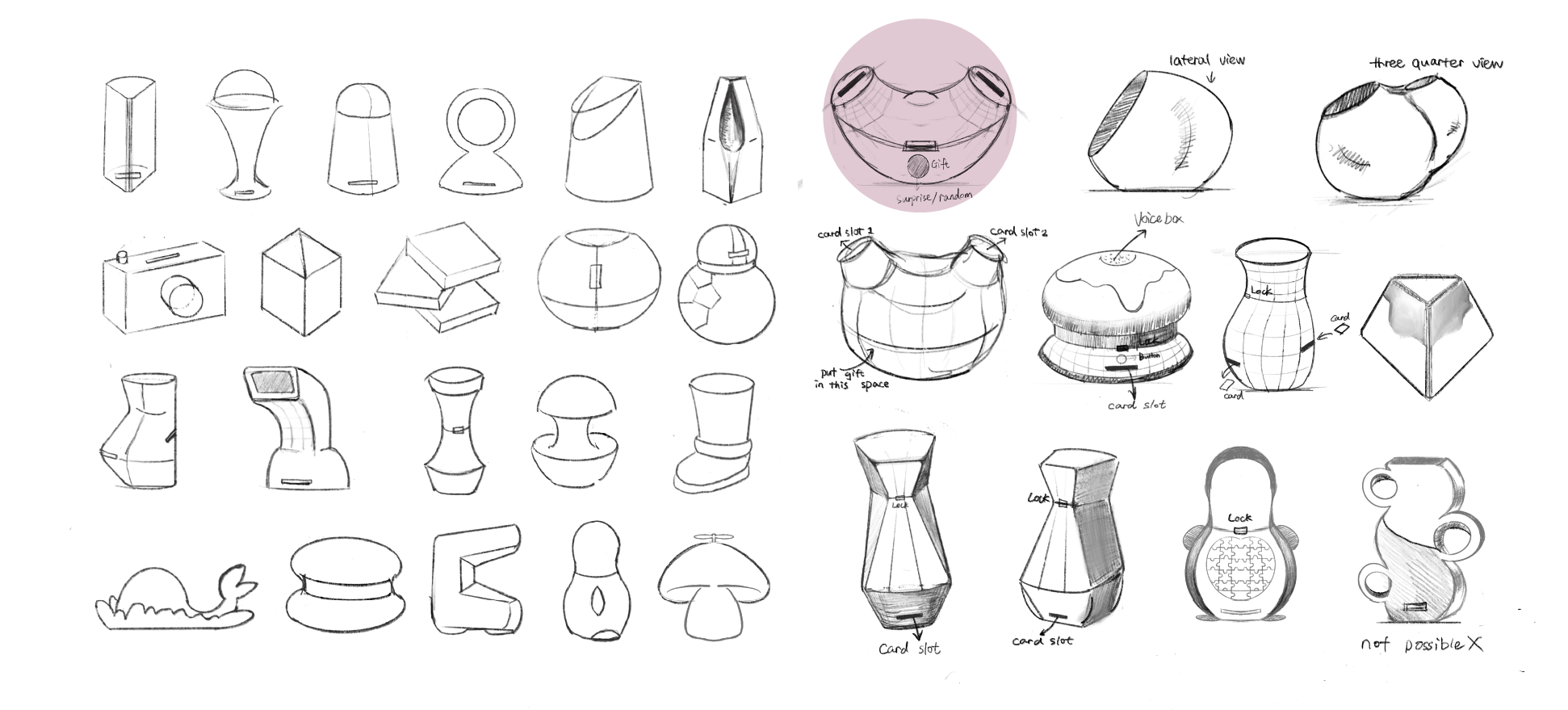
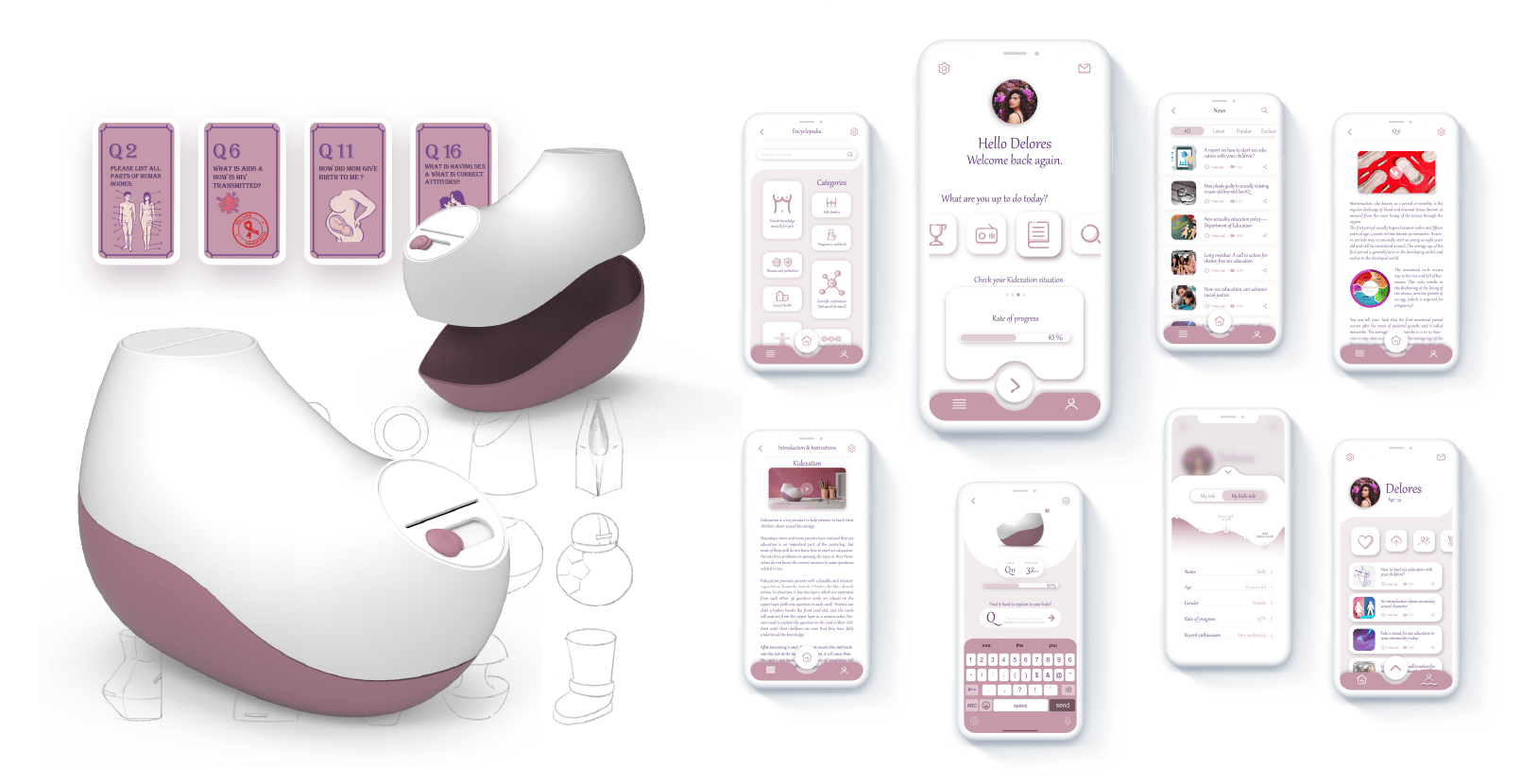
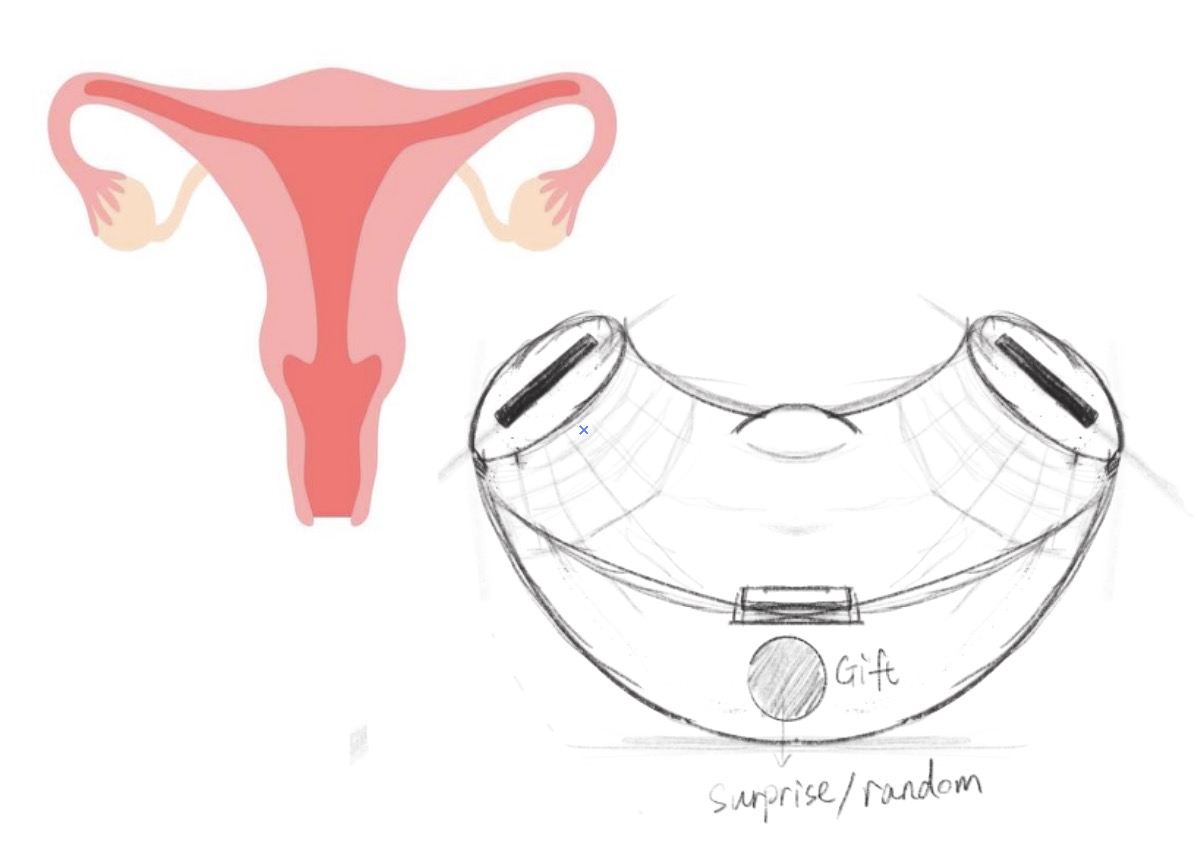
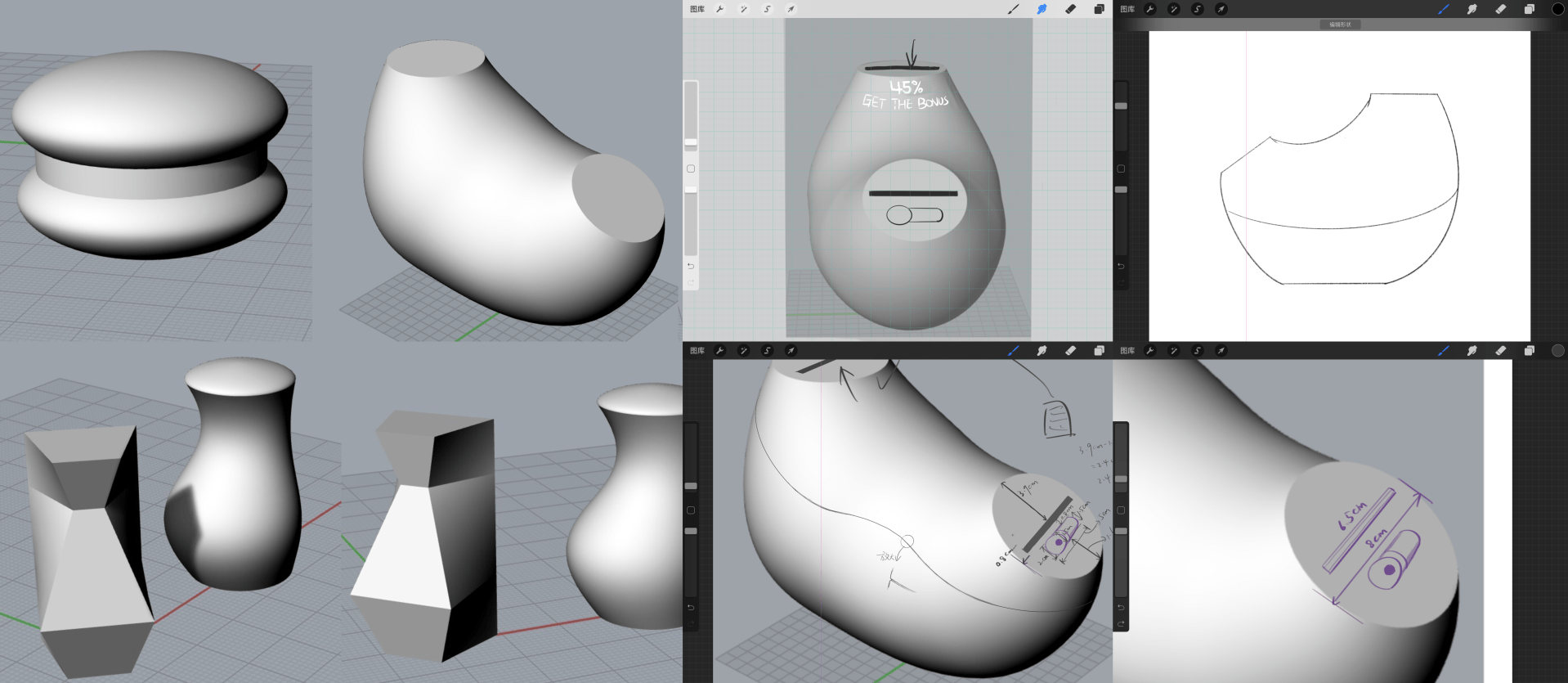
I began sketching ideas for the product’s design, exploring various shapes and concepts. The final design I chose resembles the shape of a woman’s womb, with smooth, curved surfaces. My goal was to make the design both interesting and educational, as the womb symbolizes the beginning of life. This balance creates an engaging tool for parents and children, making it easier to initiate conversations about sex education.
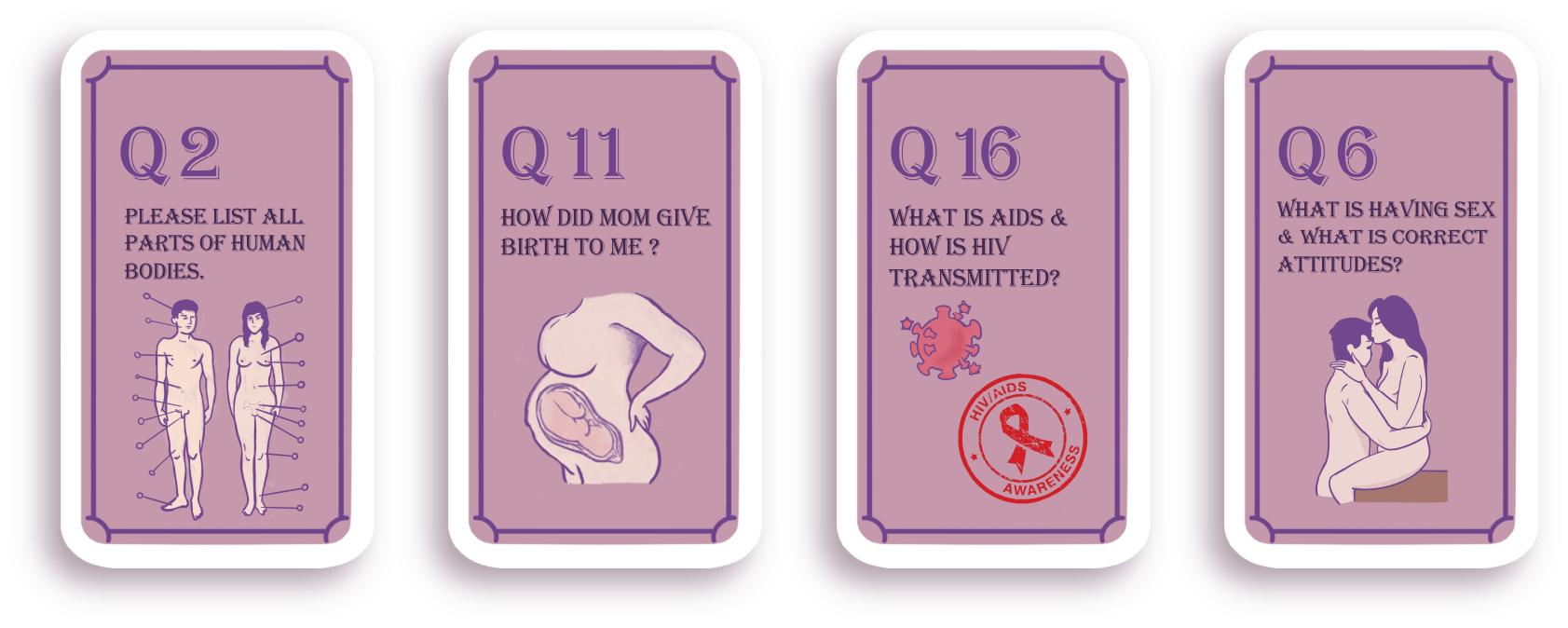
To align with the target audience’s expectations of creating a product that is interactive, fun, and educational for both parents and children, we designed it as a toy box combined with card games. The product includes question cards featuring topics related to sexual education, such as “What is HIV/AIDS?” or “Where do we come from?”
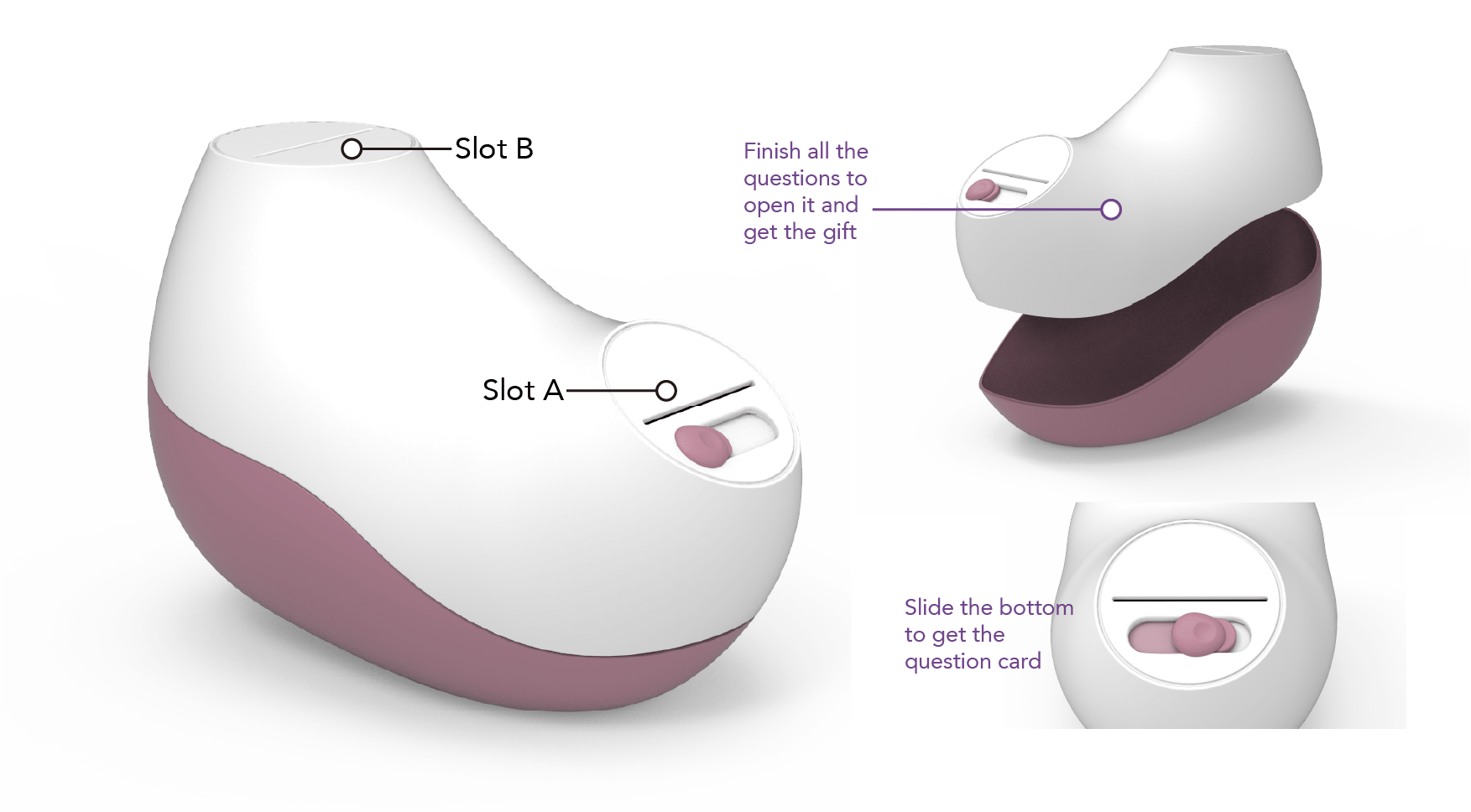
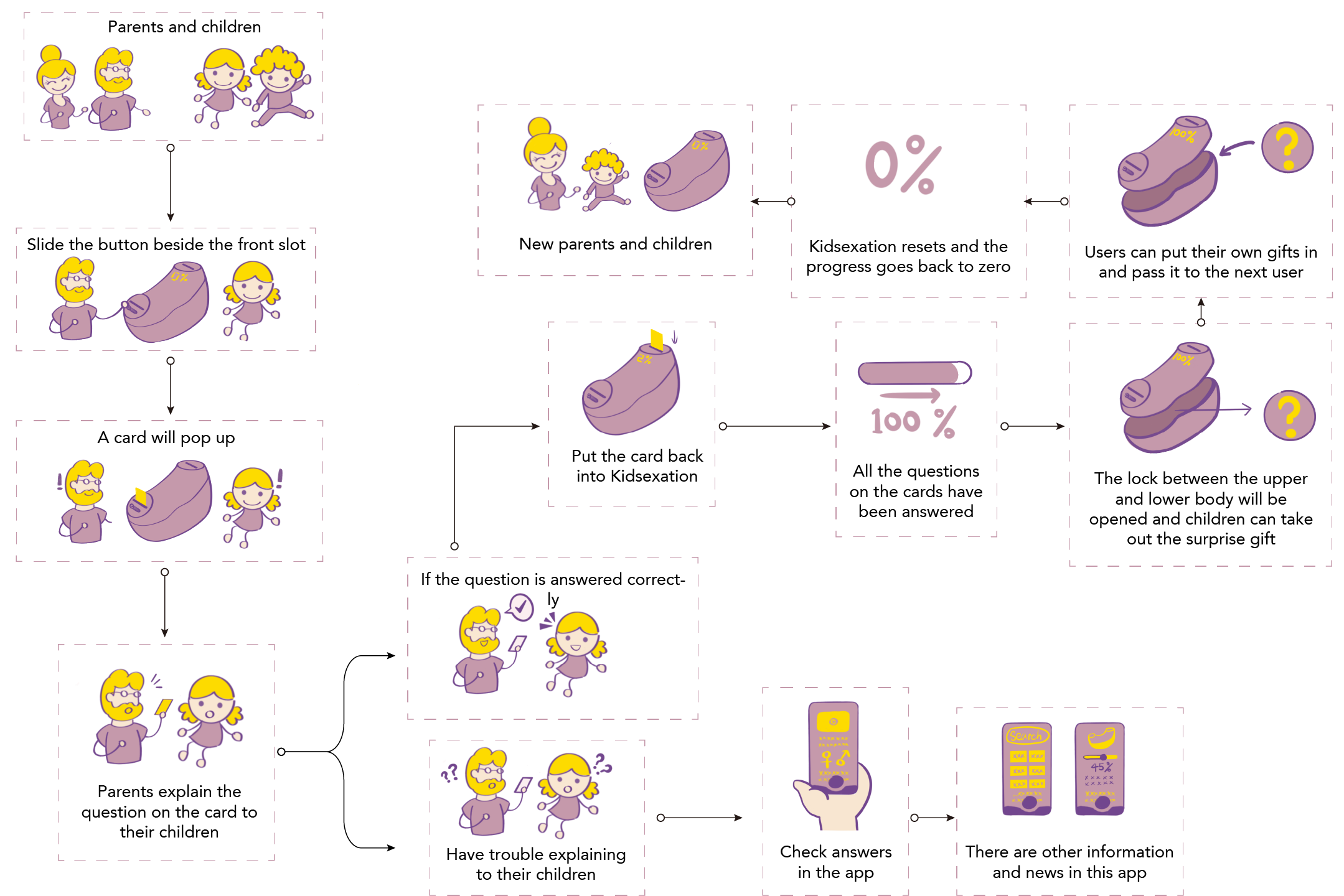
The gameplay adds structure and goals: parents and children work together to answer all the questions on the cards. Once all the questions are completed, the toy box unlocks, and they receive a bonus gift. If the questions remain unfinished, the box stays locked, encouraging continued learning and interaction.
Product Design Details:
The product is designed with two layers: an upper layer and a lower layer.
- Upper Layer: This holds the question cards, which guide the educational experience.
- Lower Layer: This contains the surprise bonus gift, which can only be accessed once all tasks are completed.
How it Works:
- Card Retrieval:
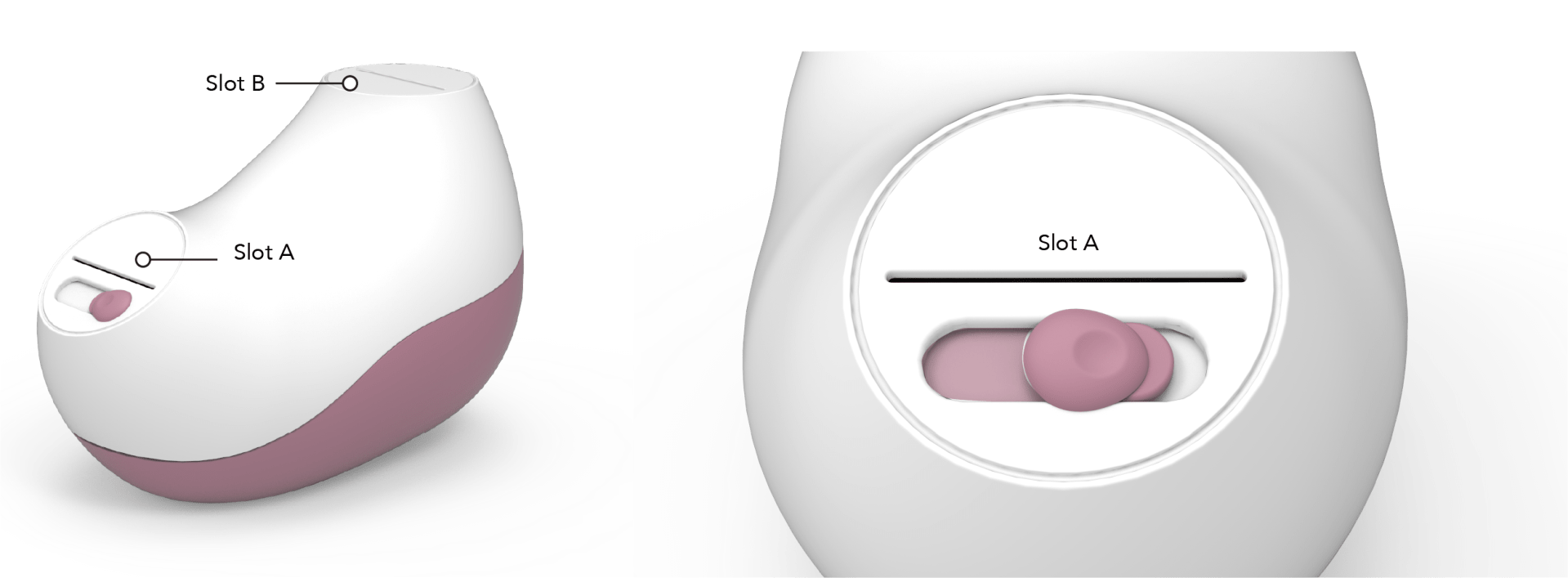
- By sliding the switch button next to Slot A, one question card pops up.
- Cards are released in a linear sequence, designed to progressively match the child’s age and development. This ensures the questions build on each other, creating a gradual learning experience.
- Interactive Learning:
- Parents and children work together to answer the question on the card. Once the question is solved and the child understands the concept, the card is returned to Slot B.
- Progress Tracking:
- When the card is inserted into Slot B, the product detects its return and marks the progress. This ensures that every question is addressed before moving to the next step.
- Unlocking the Gift:
- Once all the cards are completed and returned to Slot B, the system unlocks the lower layer.
- The toy box can then be opened to reveal the surprise gift, completing the learning cycle.
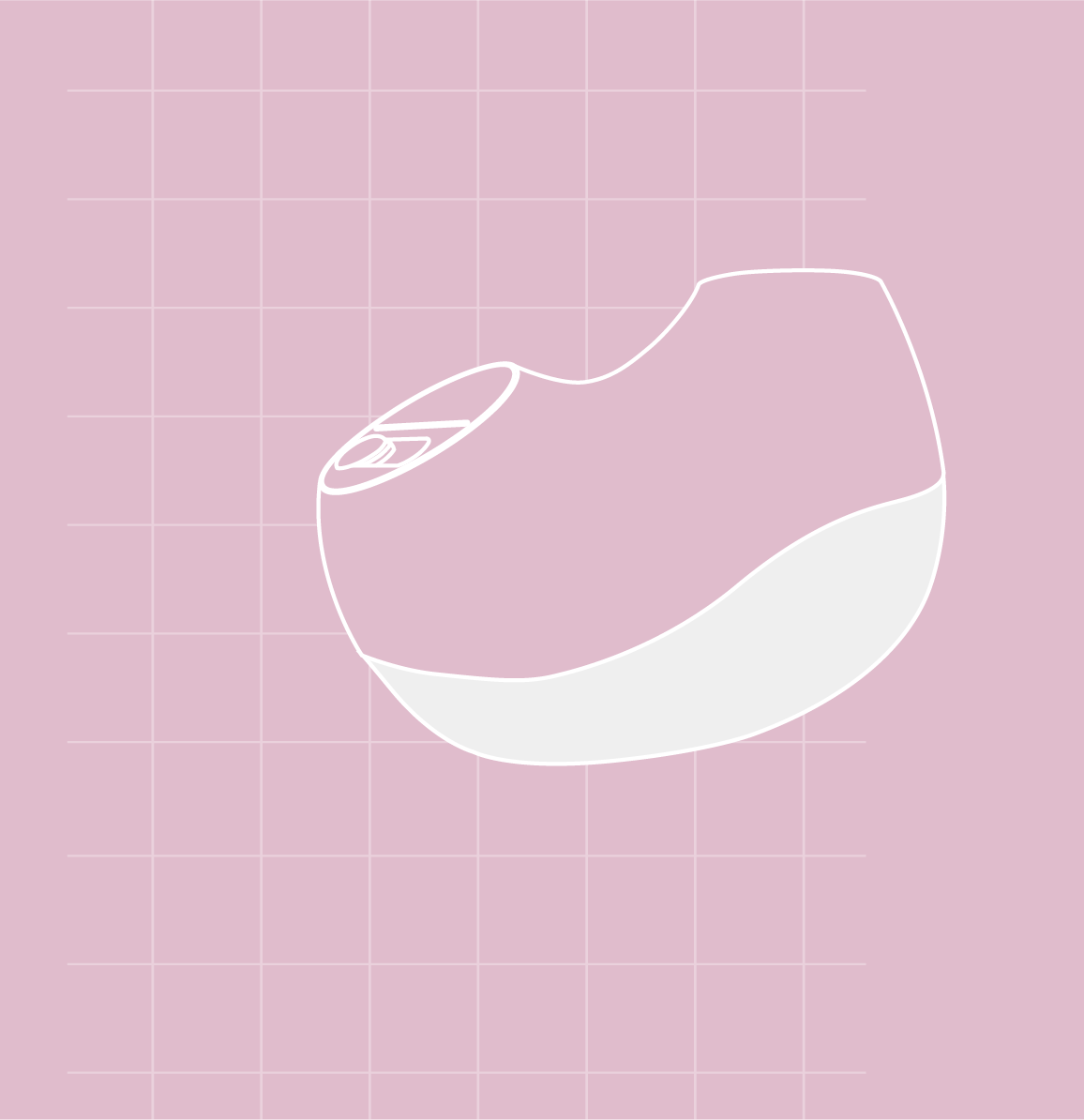
This design creates a sustainable loop.
After a family receives the bonus gift, they can place a new gift in the lower layer and pass the toy box on to another family, such as a friend’s family. This promotes reuse and minimizes waste, aligning with sustainability principles. Additionally, it fosters stronger connections and friendships between families, making the experience not only educational and surprising but also delightful and meaningful for everyone involved.
Question Cards Design:
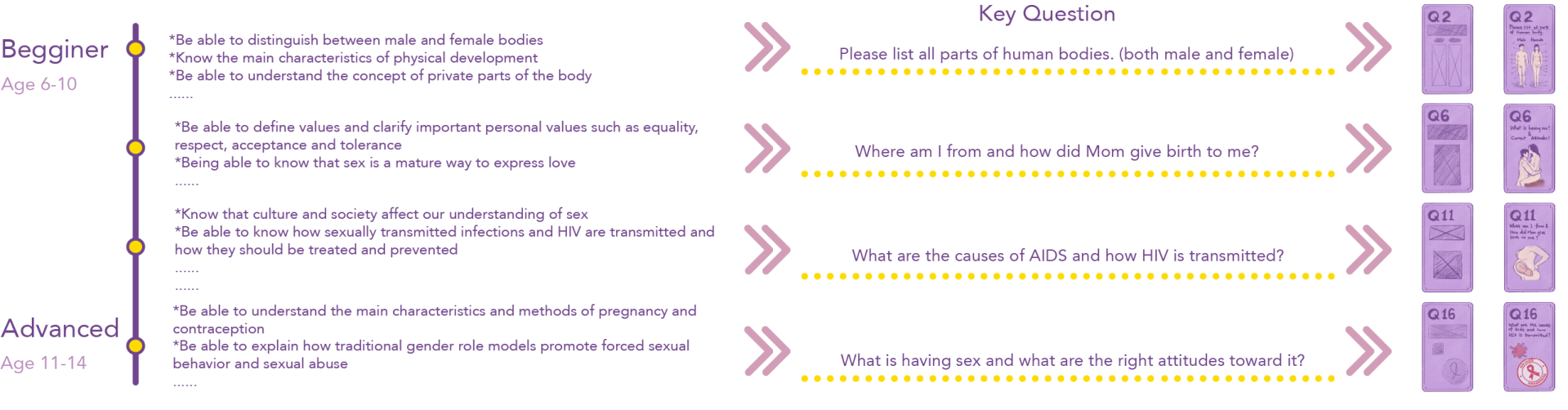
When it comes to the content on the question cards, the goal is to help parents open the conversation in a professional yet approachable way. The questions are designed to be straightforward and also follow a step-by-step learning progression to match the child’s age and understanding level.
For younger children, the questions are simple and focus on foundational knowledge, such as learning about the human body and its parts. As children grow older and their cognitive abilities develop, the questions become more advanced, covering deeper and more professional topics. This progression helps children gradually build a comprehensive and well-rounded understanding of sexual education.
Question Cards Design Examples:
Addressing the Final Challenge: When Parents Don’t Know the Answers Either
In East Asian cultures, where traditional values often make discussing sexual topics taboo, many parents lack professional sexual knowledge themselves. This is due to a generational gap in education—many parents grew up without proper sexual education, as it was neither taught at home nor included in their school curriculum. This creates a challenge: if parents don’t know the answers, how can they effectively teach their children?
The Solution: An Accompanied Mobile App
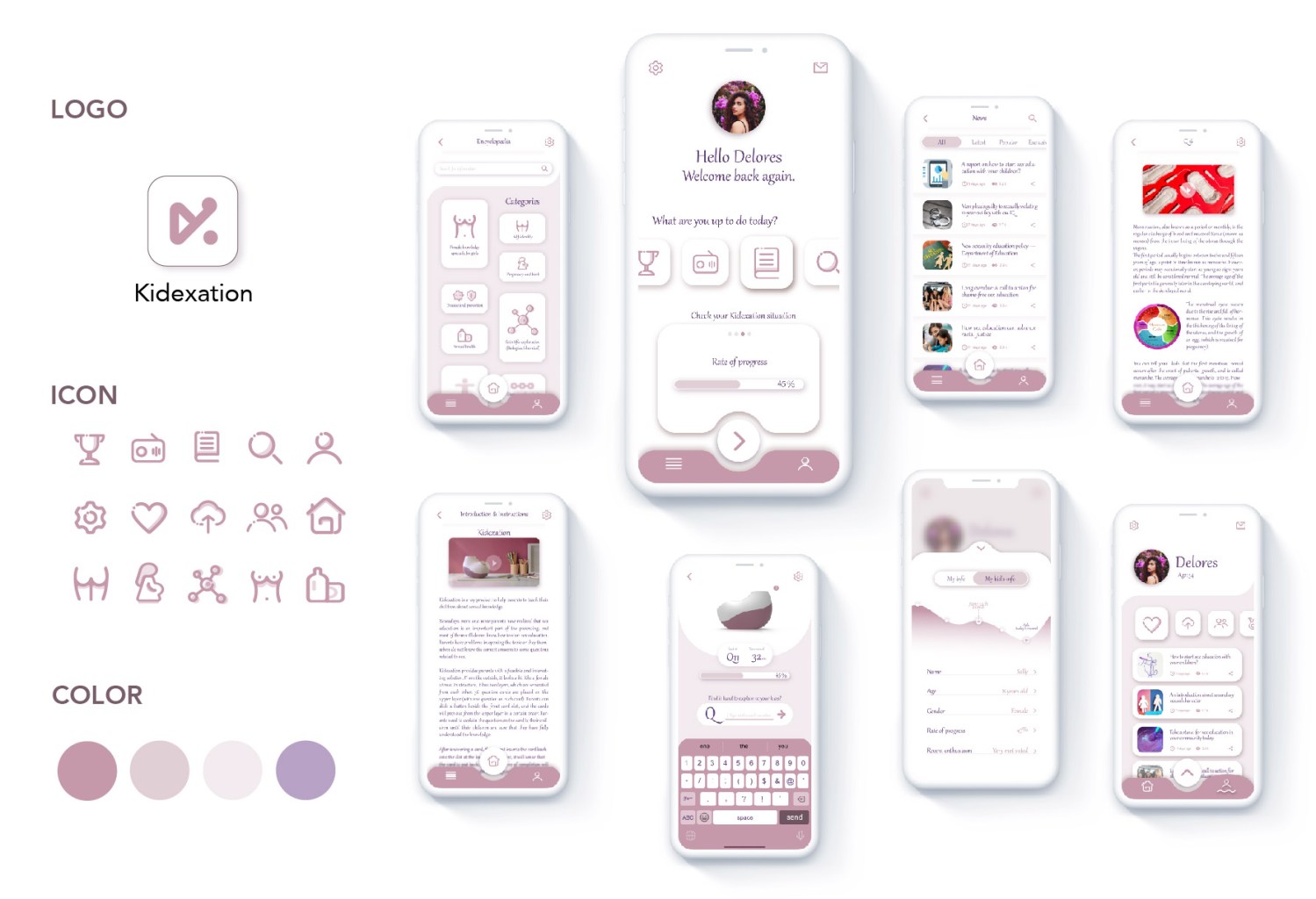
To address this, I designed a companion mobile app linked to the toy box. This app empowers parents by providing resources and guidance in the following ways:
- Answer Lookup: Parents can use the app to check answers for the question cards in advance, preparing themselves before playing with their children or even during the game.
- Progress Tracking: The app tracks the time spent on the product and logs the learning progress, giving parents insights into their child’s educational journey.
- Additional Resources: It offers related knowledge, news, and professional content to help parents become more confident and equipped to discuss sexual education topics.
- Ease of Use: The app ensures that the learning process is smooth and accessible, giving parents the tools they need to create a positive and informed experience for their children.
This solution not only bridges the knowledge gap for parents but also helps foster a more open and confident approach to sexual education within families.
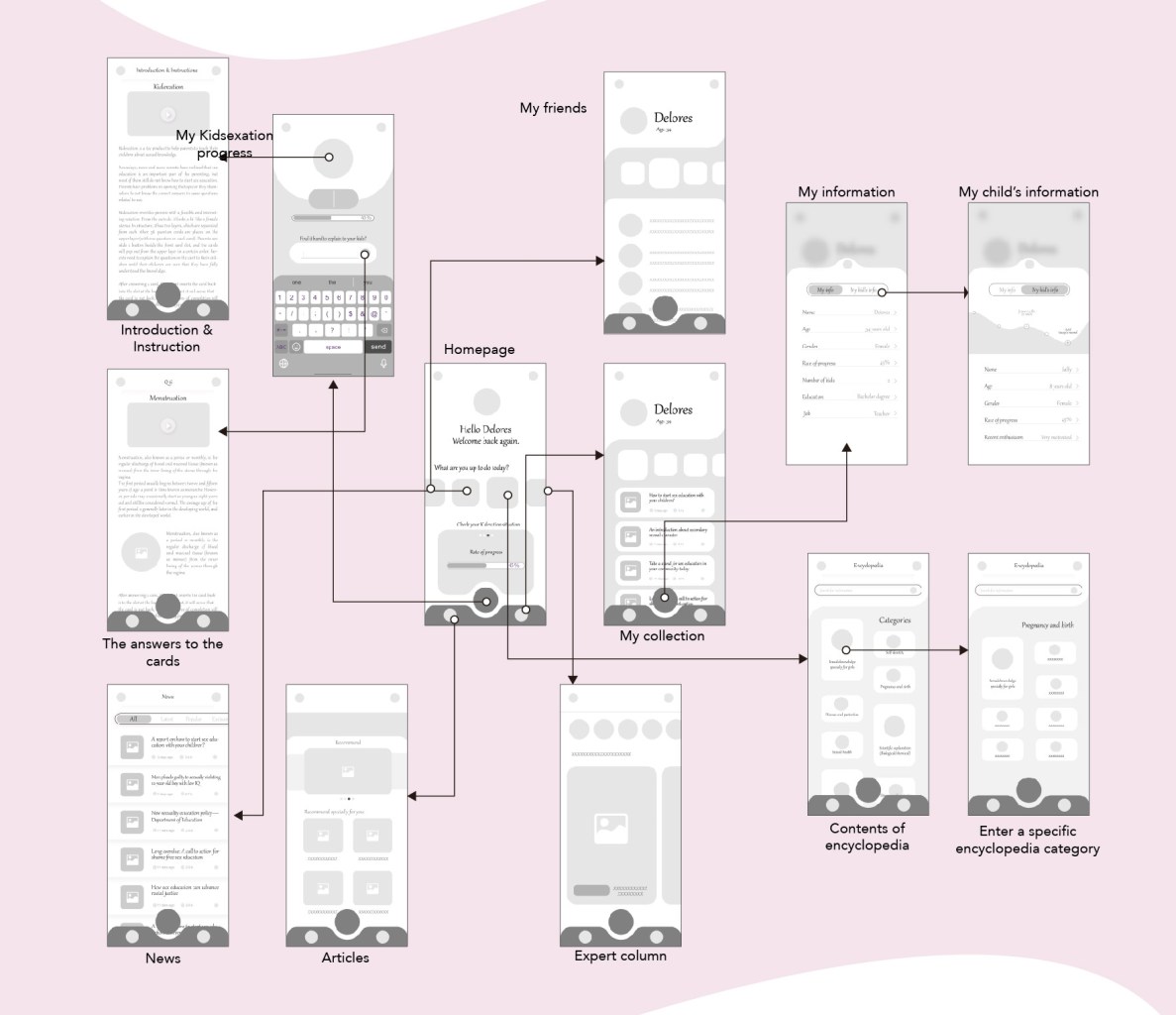
High-fidelity Mock-up and Design System:
User Flow:
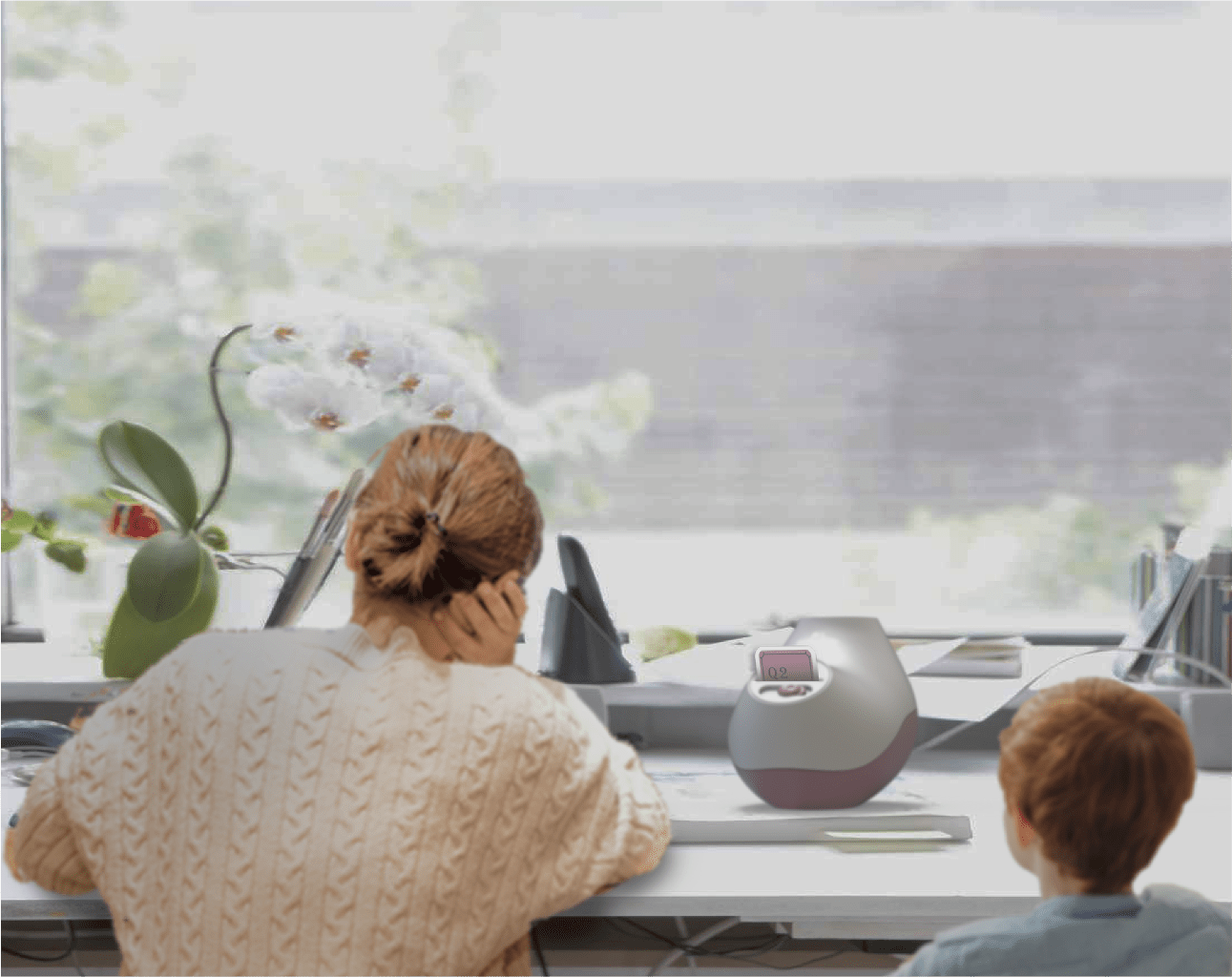
Sample Use Scene:
Reflection on the Project:
As a designer, this project was both a challenge and an opportunity to address a broad yet abstract issue—breaking the silence around sexual education in East Asian societies. The process required balancing sensitivity with practicality while designing a product that fosters communication and learning within families.
Key Design Challenges:
One of the most significant hurdles was addressing the generational knowledge gap. Many parents, influenced by traditional values, lack the knowledge or confidence to talk about sexual education. Designing a solution that not only engages children but also supports parents in their learning process was critical. This led to the development of a companion mobile app, which became a cornerstone of the design. It taught me the importance of extending a product’s usability beyond its physical form to a digital ecosystem that enhances the overall experience.
What I Learned:
- Human-Centered Design: This project reinforced the importance of deeply understanding the needs of both primary (children) and secondary (parents) users. It also highlighted the necessity of designing for empathy, especially when tackling sensitive topics.
- Designing for Education: Creating an engaging, age-appropriate learning progression was a valuable exercise in tailoring content to different cognitive levels. The structured approach, where questions scale with a child’s development, emphasized how design can make complex topics accessible and digestible.
- Sustainability in Design: Incorporating the concept of reuse and encouraging families to pass on the toy box highlighted how thoughtful design can reduce waste while building community connections.
- Bridging Cultural Gaps: This project taught me how design can act as a bridge to navigate cultural taboos. By creating a safe, interactive, and guided experience, the product helps normalize conversations around topics often considered off-limits.
Broader Perspective:
This project taught me that design is not just about creating beautiful or functional products—it is about solving real-world problems. I learned how to address user pain points while considering cultural sensitivities and how to use technology, such as the app, to enhance and complement physical products. It also underscored the role of designers in creating tools that educate, empower, and foster meaningful connections between people.
Ultimately, this project deepened my understanding of how design can shape societal attitudes, improve family dynamics, and drive positive change. It has inspired me to continue exploring how thoughtful, human-centered design can make a difference in people’s lives.
Thank you for reading all the way through! I truly appreciate your patience and time. 🙂
 YILIN ZHU
Leave a comment